Image
This article is part of the Perspectives on Social Mobility series and draws on insights from Professor María José Álvarez on how social networks, education, and institutions influence upward mobility.
At the 2025 Future of Social Mobility Conference in Chile, sociologist Professor María José Álvarez Rivadulla presented a powerful analysis of the factors shaping social mobility. Her research shows that while education and personal effort matter, they are not enough. Equally important—and too often overlooked—are social relationships, institutional practices, and the realities of the labour market.
Drawing on years of study at the Universidad de los Andes in Colombia, Álvarez illuminated the hidden mechanisms that either enable or block upward movement—especially for young people from underrepresented backgrounds.
Social networks as gateways, not substitutes
Prof. Álvarez stressed that social networks serve as essential entry points for young people aiming to advance socially—particularly when financial support at home is lacking. Connections with individuals from different classes, occupations, or social statuses can unlock vital opportunities: access to job leads, career advice, insider knowledge, and influential introductions.
But building new relationships does not require leaving behind those closest to us. Bonds with family, friends, and community members who know us well continue to offer emotional strength, mutual trust, and practical help during times of uncertainty.
Successful mobility depends on having both types of connection:
Bonding ties – deep relationships with people like ourselves
Bridging ties – links across social divides
Combining these creates stronger, more sustainable pathways upwards. True mobility is rarely achieved in isolation; it thrives through diverse support systems.
Education and first jobs as critical junctures
Two key moments stand out in shaping life chances: entering higher education and securing a first meaningful job.
Gaining access to university remains one of the most important steps toward greater opportunity. Completion alone does not erase disadvantage. For many, the next hurdle—the transition into employment—is just as decisive.
A strong start in the labour market influences long-term earnings, career progression, and professional visibility. This means social mobility cannot be measured solely by degrees earned. It also hinges on whether graduates secure good-quality roles where their skills are recognised and rewarded.
Employers Hold Unequal Power
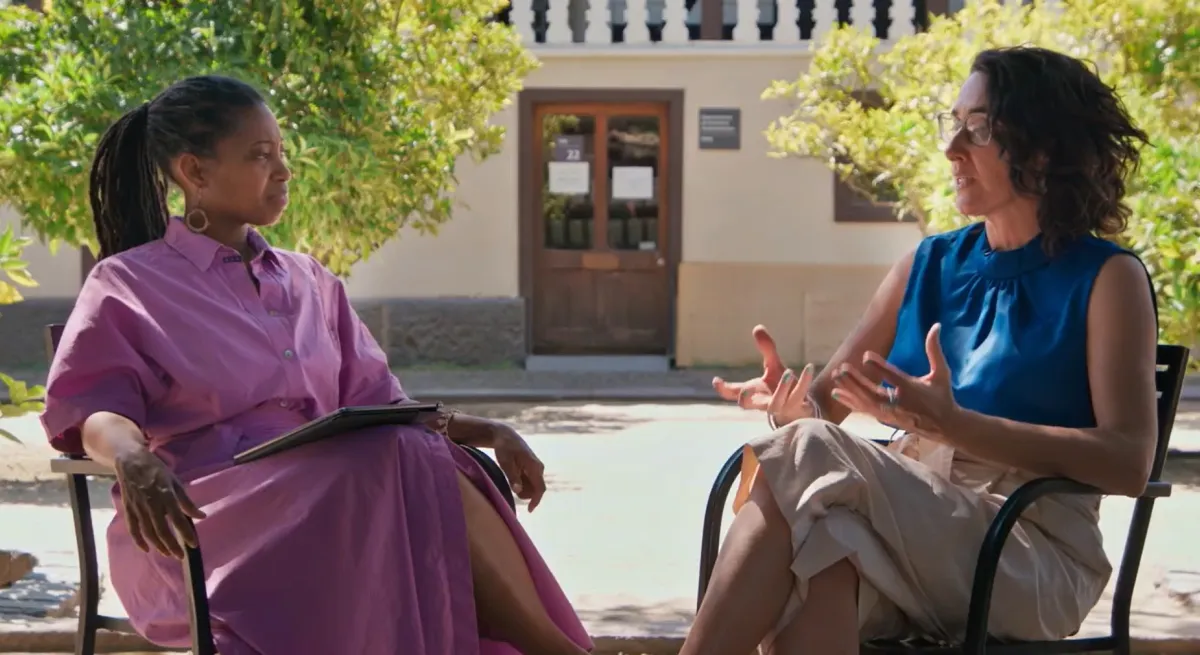
Prof. Álvarez pointed to a significant gap in existing research and practice: while education systems have been extensively studied as engines of mobility, employers and recruitment processes have received far less scrutiny. The job interview—particularly for first-time entrants to the labour market—is one of the most consequential moments in a young person’s life.
She highlighted how class-based biases operate subtly but powerfully during recruitment. Interviewers often believe they are being fair, yet unconsciously favour candidates who “feel familiar”, share similar communication styles, or reflect their own social and educational trajectories. For first-generation university students, low-income graduates or racialised individuals, this mismatch can be decisive.
Addressing this requires conscious effort on the part of employers. Álvarez called for a shift towards valuing effort, resilience and potential, rather than merely cultural similarity. She imagined a future in which organisations actively take pride in employing a significant proportion of individuals from minority or disadvantaged backgrounds—not as charity, but as a mark of institutional excellence.
Why cross-class integration is so difficult
Even when students from differing socioeconomic levels attend the same university, genuine interaction remains uncommon. Why?
Segregation begins long before higher education. Young people raised in deeply divided societies typically inhabit separate worlds: different schools, neighbourhoods, and social circles. When they eventually meet in lecture halls, they bring contrasting values, experiences, and reference points.
Shared space does not guarantee shared understanding. Speaking different 'social languages', living apart geographically, and managing unequal resources makes authentic connection difficult—even when physical proximity exists.
Prof. Álvarez describes overcoming this divide as “relational work”: deliberate, ongoing efforts to build bridges where none existed. It takes time, empathy, and structural encouragement.
Institutions must design for inclusion
One of Prof. Álvarez’s most important interventions was her insistence that institutions must take responsibility for fostering meaningful interaction across social divides. Schools, universities and employers cannot assume that diversity alone will produce integration. When nothing is done, exclusion tends to reproduce itself.
She advocated for deliberate institutional design: mixing students randomly rather than allowing self‑selected groups; creating structured discussion spaces among people from different backgrounds; and implementing mentorship programmes that link individuals who would not otherwise meet. Such mentors can help newcomers navigate the “hidden curriculum” of institutions—those unspoken rules and expectations that advantaged groups often take for granted.
While Prof. Álvarez acknowledged that this work is difficult, she underscored that inequality is not neutral. Without intentional intervention, social divides persist.
Mobility as a collective endeavour
Taken together, Maria José Álvarez’s insights challenge the idea that social mobility is primarily a matter of individual merit. Instead, mobility emerges from networks, institutions and labour markets that either widen or restrict access to opportunity.
Her contribution at the Future of Social Mobility Conference served as a reminder that enabling upward mobility requires more than opening doors—it demands changing how people meet, how decisions are made and how institutions define fairness. Social mobility, she argued, is not simply about moving up; it is about ensuring that no one has to do so alone.