Image
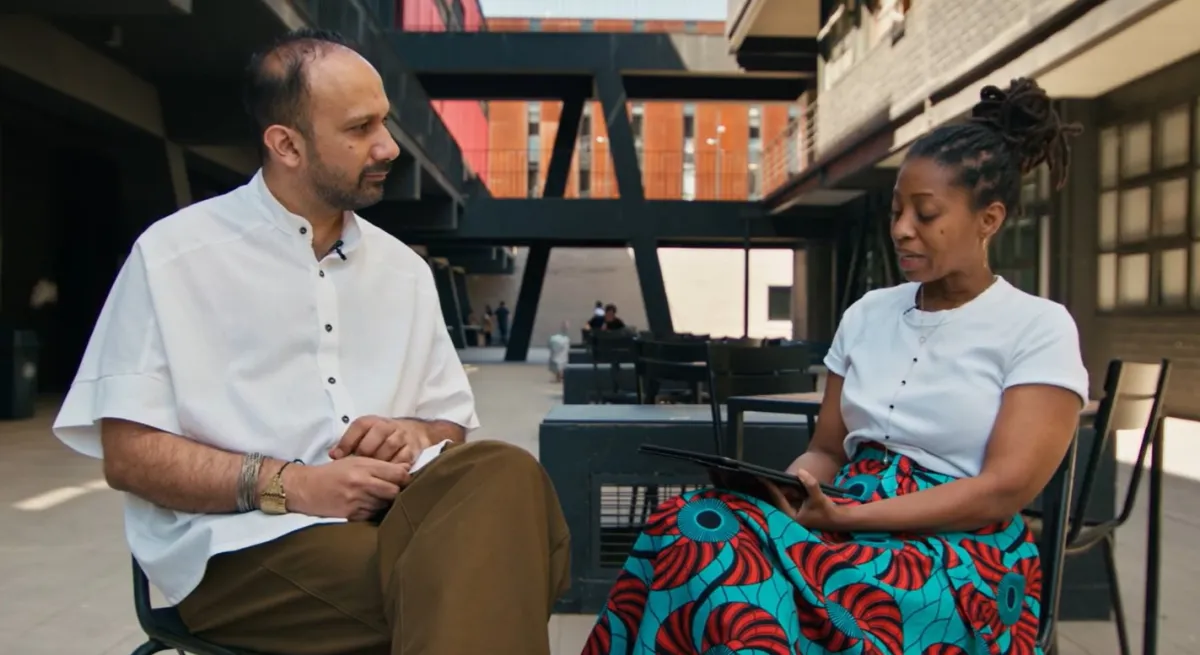
As part of the Perspectives on Social Mobility series, this article draws on a conversation between Nathalie Jean Baptiste, Head of Programmes at the Julius Baer Foundation, and Professor Gautam Bhan, Associate Dean at the School of Human Development at the Indian Institute for Human Settlements (IIHS).
Their discussion highlights the urgent need to rethink social protection in rapidly urbanising regions of the South —where inequality is not simply an outcome but a structural condition shaping daily life.
When Growth Is Not Enough: Structural Inequality in Southern Cities
Across the South, economic growth often fails to improve the lives of most residents. As Professor Bhan notes, “structural inequality means that market growth by itself—even when successful, even when GDP numbers add up—will not distribute the gains of that growth evenly.” When inequality becomes structural, even families who save, invest and cannot ensure better outcomes for their children; growth alone does not share its gains.
He offers a striking metaphor: “It’s like the sieve has broken.” No matter how hard families work—saving, investing, striving—they cannot overcome structural barriers. The result is persistent, intergenerational poverty unrelated to individual effort.
In many southern cities, exclusion is not confined to a small minority. “It’s not the last mile of 10 or 15%,” Bhan points out. “It’s actually a majority of your citizens that are left out.” In such contexts, social protection cannot remain marginal or reactive—it must be transformative.
From Safety Nets to Trampolines: A New Understanding of Social Protection
Traditional social protection aims to prevent extreme hardship by providing basic needs such as food security, primary healthcare, and elementary education. While essential, Bhan argues that these measures are insufficient in cities marked by growing disparities. Instead, he calls for transformative social protection—approaches that enable upward mobility rather than simply cushioning people from shocks.
He outlines three tiers of social protection:
Transformation, however, goes beyond education. Affordable housing must offer secure, well-located homes near employment opportunities. Public transport should be free and reliable, reducing time and cost burdens for low-income worker. Clean water and sanitation are not only technical issues but expressions of urban justice.
“If the link between education and employment is breaking,” Bhan warns, “then what we’re giving to people must change.”
This shift demands new entitlements grounded in dignity, agency, and inclusion.
Rooted Ideas, Not Imported Templates
A central theme in Bhan’s analysis is the need for policies that reflect local realities. Too often, urban strategies are imported from elsewhere—from smart city models to international slum-upgrading blueprints—without recognising local histories, cultures, and political contexts.
“Ideas must be rooted,” he stresses, “because roots allow you to grow out.” A policy may succeed in one setting but fail in another—not because of weak delivery, but because it does not fit local norms or institutions. The risk lies either in blindly copying global models or in dismissing external learning altogether.
Bhan instead advocates for grounded innovation: adapting principles to local ecosystems while remaining faithful to broader goals. For example, a city with expanding informal settlements may not adopt European zoning laws, but can draw on regional experience to build participatory land tenure systems.
The key measure of success is whether communities can recognise and accept proposed solutions. “Is this an idea this place can receive?” becomes the essential question for policymakers.
Power, Partnership, and the Possibility of Change
Meaningful change rarely emerges from either top-down directives or grassroots action alone. Bhan argues that progress occurs when two forces align: those who call for justice, and those within institutions who can act on that call.
Building on his colleague’s framework, he identifies three actors in urban transformation:
History shows that protest alone is not enough. Reflecting on the Arab Spring, Bhan notes that “the initial moment of struggle did not lead to large-scale improvements… because there wasn’t any system to receive it.” Without administrative capacity or receptive leadership, momentum dissolves.
Coalitions across different groups are therefore essential. He emphasises the potential of “middle-level partnerships”—collaborations between modest-sized businesses, community organisations, waste cooperatives, and municipal governments. These differ from conventional public-private partnerships, which often reinforce elite interests.
“Not all private has to be corporate,” he reminds us. A locally owned factory working with city authorities on worker housing or transport is an alliance capable of redistributing value without concentrating power.
These mid-sized, locally grounded actors can be both flexible and accountable. Their proximity to communities creates responsiveness often lacking in distant bureaucracies.
Conclusion: Towards More Just Urban Futures
Creating fairer cities in the South is a complex, uncertain path. Yet this conversation demonstrates both the urgency and the potential for change.
Structural inequality erodes hope across generations. Conventional social protection cannot withstand its pressures. Only transformative, context-specific, and collaborative approaches can begin to reverse entrenched disadvantage.
Lasting change depends on the convergence of vision and pragmatism, activism and administration, external insight and local knowledge. As Bhan concludes, “when those two moments...can combine, you can see actually lasting systemic change occur."
For cities seeking fairness, inclusion, and shared prosperity, fostering such alignment may be the most essential task of all.
This article forms part of the Wealth Inequality Initiative’s ongoing exploration of social mobility and inclusive development. The conversation between Nathalie Jean Baptiste and Gautam Bhan took place during the ‘Future of Social Mobility’ conference, supported by the Julius Baer Foundation.