Image
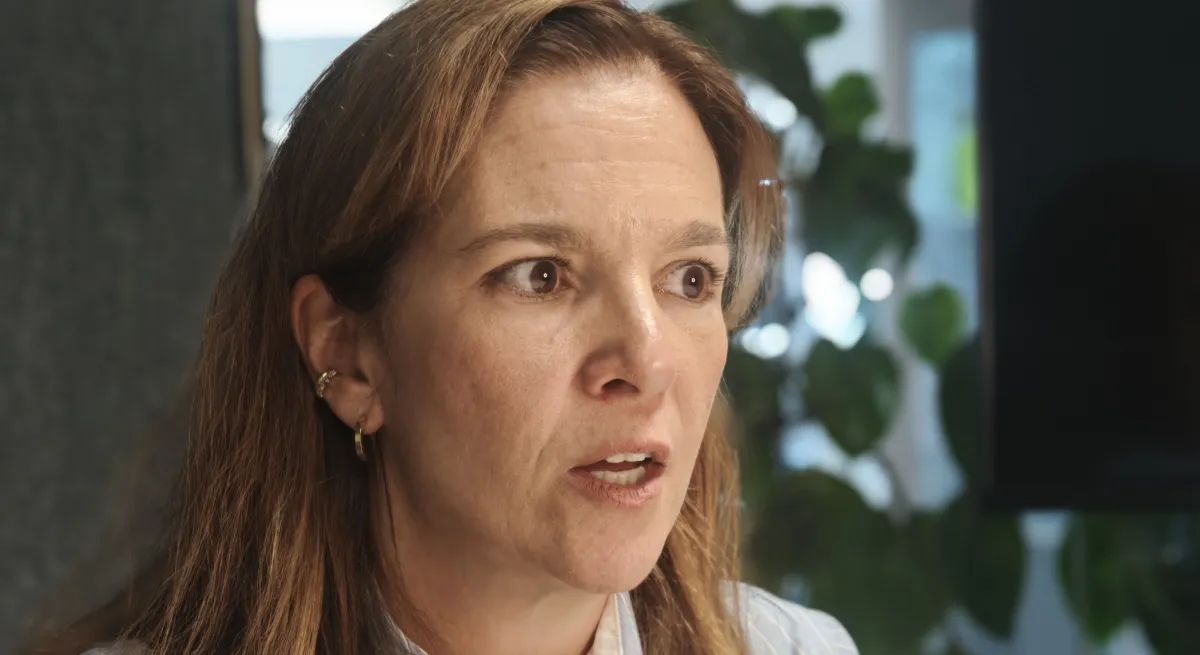
Video file
What is Confluentes?
Confluentes is a philanthropic network designed to bring high-income individuals in Brazil closer to strategic giving. Nicole Carnizelo explains that Brazil has a very weak culture of donation: less than 1% of GDP is donated annually, compared with around 2% in the United States. This is particularly striking given Brazil’s extreme levels of inequality, where the wealthiest 10% earn more than 60 times what the poorest 10% earn.
Paradoxically, it is often the poorest Brazilians who donate most frequently. Confluentes seeks to shift this imbalance by helping people with economic privilege recognize their responsibility—and their potential impact. By donating strategically and collectively, members are able to support organizations tackling Brazil’s most urgent social and environmental challenges.
What have been your key learnings from bringing together high‑income individuals? And what does “learning by doing” mean in practice?
According to Carnizelo, Confluentes goes beyond simply directing donations. While the network has a rigorous process to identify and support effective organizations, learning is at its core.
Confluentes creates safe spaces where donors engage directly with social leaders, academics, artists, and political figures. These encounters allow participants to ask difficult questions, express vulnerabilities, and deepen their understanding of complex social issues. Carnizelo describes this as building “repertoire”—equipping people with the context and language needed to discuss inequality meaningfully.
In her words, Confluentes is about “investing in influencers for good”: empowering people who already occupy influential positions in society to carry informed perspectives into their professional and personal networks.
What makes Confluentes particularly important in Brazil? And is this model replicable in other parts of Latin America?
While cultural contexts differ, Carnizelo believes the model is highly replicable. Even within Brazil—a country she describes as “a continent”—there remains enormous untapped potential beyond São Paulo, where much of the country’s wealth is concentrated.
Latin America more broadly faces deep structural inequalities and an underdeveloped philanthropic culture. Confluentes demonstrates that bringing high-income individuals together in structured, values-driven networks is an effective way to activate resources and responsibility across the region.
How is inequality visible in everyday life in Brazil, particularly wealth inequality?
For Carnizelo, inequality is omnipresent—and dangerously easy to ignore. She recounts everyday scenes: people begging at traffic lights, asking for digital transfers because cash is no longer common; families living without secure housing, water, or sanitation. Around 35% of Brazilians lack access to basic sanitation, an unacceptable reality in such a resource-rich country.
She notes that children often notice inequality more acutely than adults, who have learned to look away. Confluentes, she argues, offers a way for people to engage without needing to abandon their careers. “You don’t need to become an NGO manager,” she says. “You can stay who you are—and still take responsibility.”
How do you engage wealthy individuals who may feel guilt or shame about their privilege or generational wealth?
The key, Carnizelo explains, is reframing guilt into responsibility. Guilt and shame tend to paralyze, pushing people into invisibility. Responsibility, by contrast, leads to accountability and action.
In a country shaped by colonialism and nearly 400 years of slavery, acknowledging privilege is unavoidable. But Confluentes encourages donors to see this acknowledgment not as an accusation, but as the starting point for meaningful engagement and transformation.
Are Confluentes members encouraged to understand the historical roots of inequality in Brazil?
Absolutely. Understanding the origins of inequality is a central pillar of Confluentes’ approach. Carnizelo points out that although over 60% of Brazilians identify as Black, the majority of high-income donors are white—an outcome directly linked to Brazil’s colonial and slavery-based history.
Through discussions with social organizations and experts, donors explore why inequalities exist, how recently corrective laws have been introduced, and how much historical catching-up remains necessary. This context is essential for building both empathy and responsibility.
How do you decide which causes and organizations Confluentes supports each year?
Each year, donors choose three thematic causes. While traditional philanthropy in Brazil often focuses on emergency needs such as hunger, health, or education, Confluentes prioritizes structural change.
The network supports organizations that address root causes rather than symptoms—defending democracy, combating misinformation, advancing racial, gender, and LGBTQ+ equality, and addressing the unequal impacts of climate change. A highly experienced philanthropic team curates and selects the organizations that best address these causes.
You often say you transform donors into changemakers. How does that happen?
The impact of Confluentes operates on multiple levels. Financially, it directs resources toward organizations working on systemic solutions. Culturally, it helps build a philanthropic mindset among Brazil’s medium- and high-income earners.
Perhaps most importantly, it creates informed advocates. Participants return to their workplaces—as senior professionals, executives, and leaders—better prepared to speak about inequality, democracy, regulation, and social justice. In a highly polarized society, this creates ripple effects far beyond the philanthropic sector.
If initiatives like Confluentes and the Wealth Inequality Initiative succeed, what would a more equal Brazil look like?
Carnizelo resists ideological labels. A more equal Brazil, she argues, would simply be one where basic human rights—already enshrined in the constitution—are effectively implemented.
Given Brazil’s immense wealth in land, water, food, and energy, the persistence of extreme poverty is not a question of resources, but of execution, governance, and collective will.
How do partnerships, such as with the Julius Baer Foundation, support your work?
Institutional partnerships are essential to Confluentes’ model. Because 100% of donor contributions go directly to supported organizations, partners like Julius Baer enable the network’s operations, learning spaces, and international exchanges.
These partnerships also facilitate global dialogue, connecting Brazilian initiatives with peers and experts across regions and helping scale collective learning on wealth inequality.
Looking ahead, what does success look like for Confluentes over the next three to five years?
In the near term, Carnizelo envisions organic growth—doubling the network while preserving its participatory, dialogue-based model. Scaling requires resources and people, particularly to replicate the intimate gatherings that define Confluentes.
The long-term vision is ambitious: if even half of Brazil’s top 1% donated a modest annual amount, billions could be mobilized for social transformation. “That,” Carnizelo concludes, “would already solve so many problems.