To mark the 60th anniversary of the Julius Baer Foundation, we launched “60 Facts on Wealth Inequality” — one fact for every year since our founding. The series highlights the realities of unequal wealth distribution and shows how it affects people’s lives, communities, and the stability of societies around the world.
This final piece looks at how digitalisation, rather than bridging gaps, often widens them. While technology promises progress for all, too many in low-income areas face growing disadvantages — excluded from opportunities and left exposed to new risks.
As we bring the 2025 series to a close, we encourage continued reflection and engagement with the Foundation’s work in the years ahead.
Digital divides are income divides
Digital technology and globalisation promised equal access and new chances to improve living standards — especially for the world’s most disadvantaged. But the reality falls short.
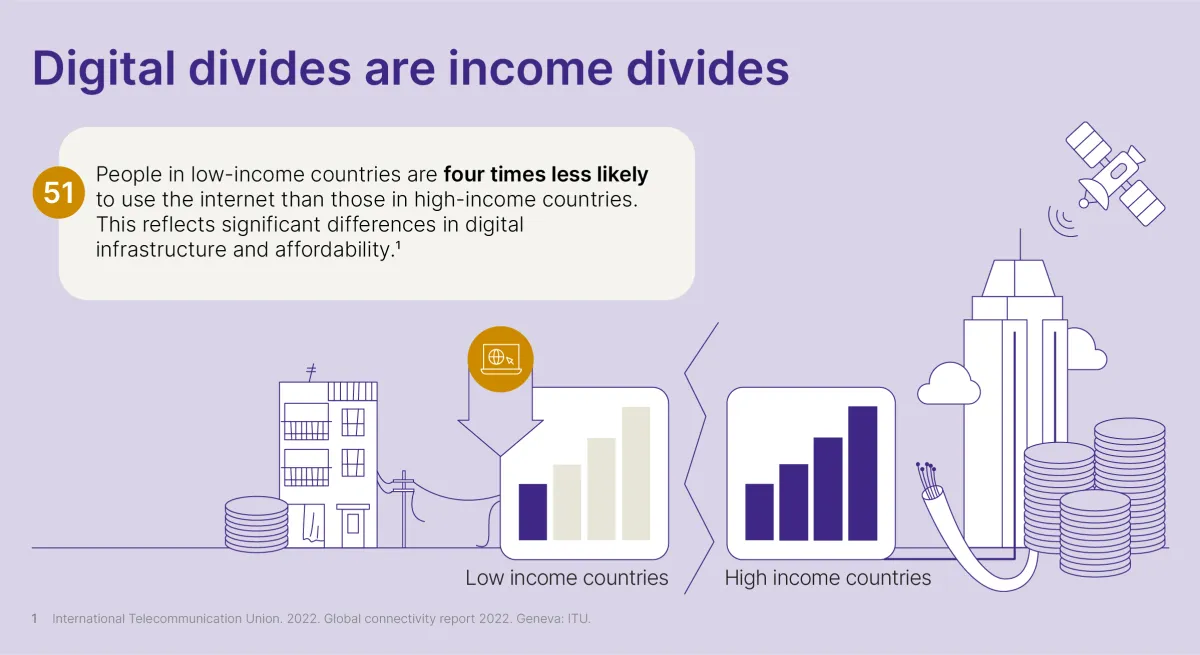
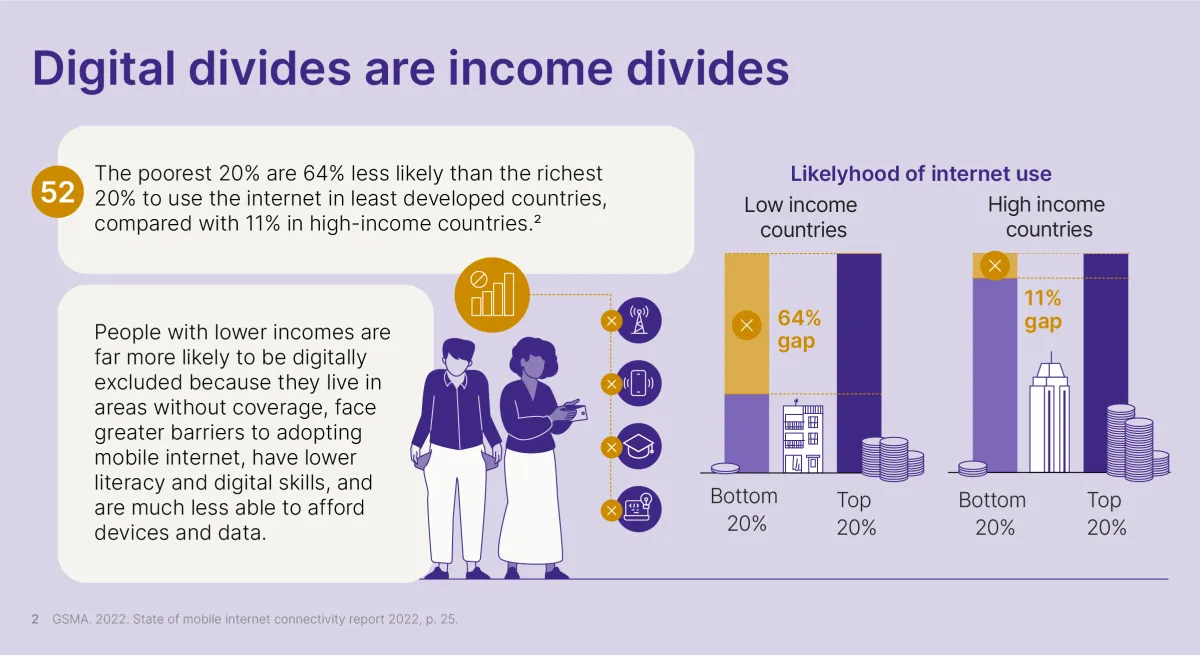
People in low-income countries are four times less likely to use the internet than those in high-income countries. Even within the poorest nations, access is highly unequal: the poorest 20% are 64% less likely to be online than the richest 20%. In contrast, the gap in wealthier countries is just 11%.
For most, being offline is not a choice. It is the result of structural barriers — including cost, availability, education, and skills — that lock people out of the digital world before they can even begin to benefit from it.
Why This Matters for Everyone
Poor internet access, unaffordable devices, low literacy, and inadequate digital skills are key barriers that keep the poorest from accessing even basic digital opportunities.
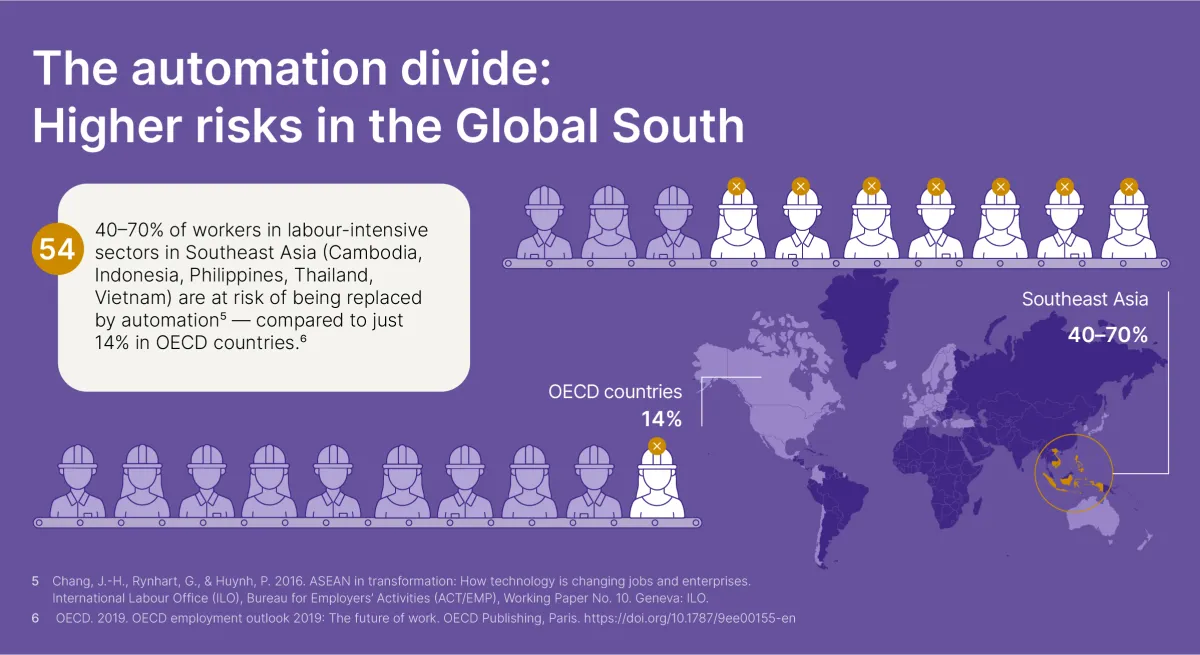
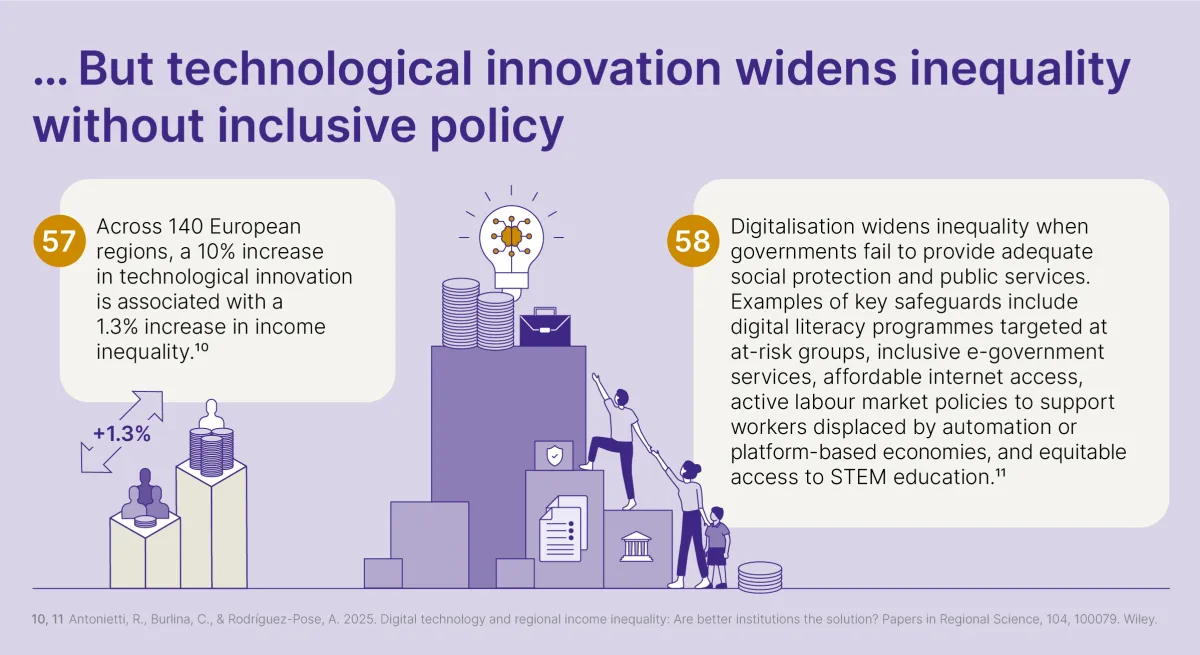
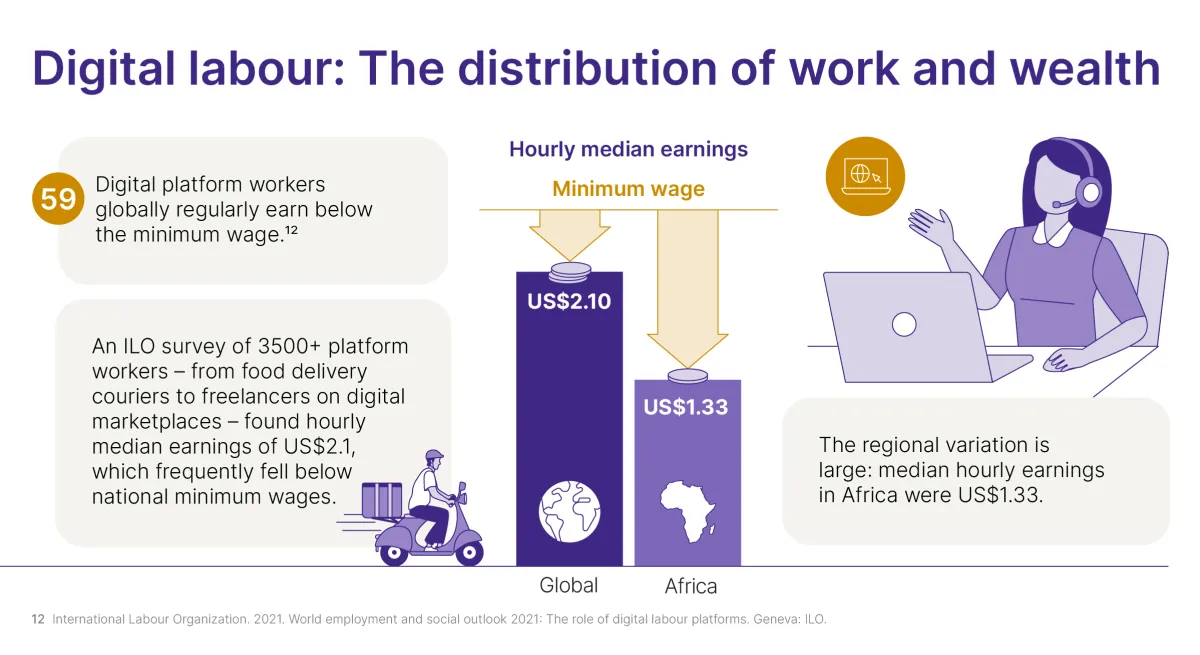
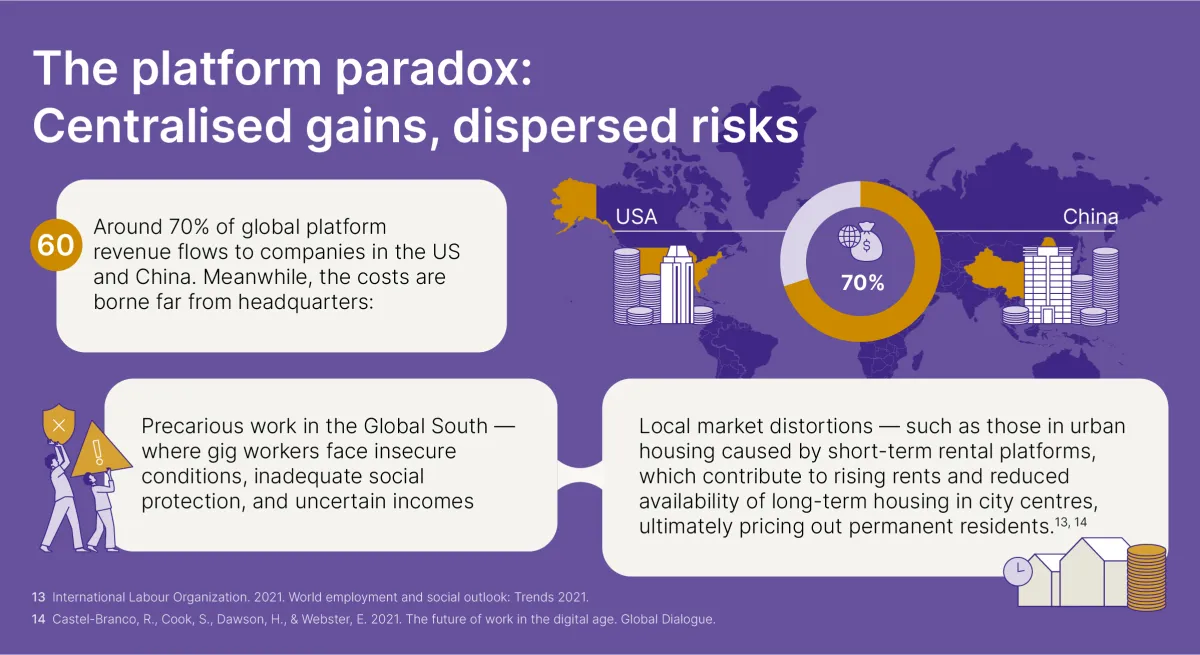
The challenges extend beyond access. Research shows that most digital labour platforms pay poverty wages for insecure and often dangerous work. Around 70 per cent of the income generated goes to companies based in the US and China — meaning profits concentrate in the most technologically advanced economies, while workers in the Global South bear the brunt of uncertainty and risk.
Without stronger regulation and focused investment, the deepest inequalities will persist — locking more people into marginalisation and exclusion.
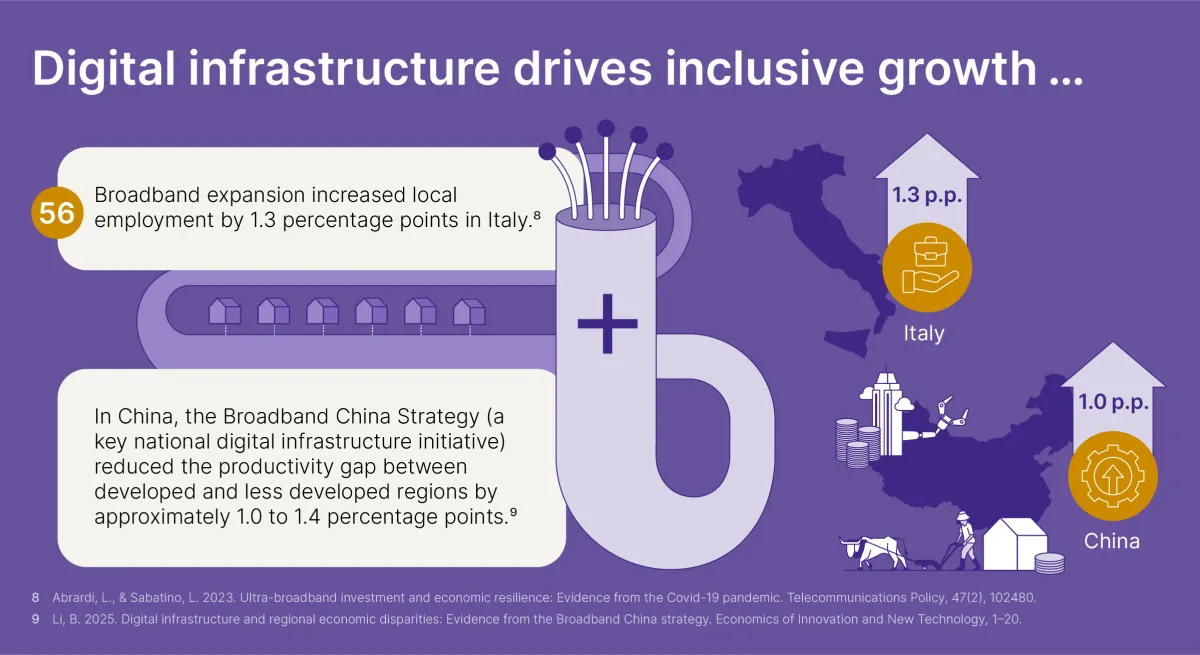
These imbalances fuel wider wealth gaps. To close them, we need enforceable rules and widespread investment in infrastructure, connectivity, and job-relevant skills. Only then can growth become fairer, more stable, and truly inclusive across borders and income levels.
Our contribution
The Julius Baer Foundation supports initiatives that advance digital skills, promote fair employment, and strengthen local infrastructure. These efforts aim to create lasting livelihoods and empower small enterprises — ensuring more people can participate in and benefit from economic growth.
Take MEET, which brings together young people from underrepresented communities in Palestine and Israel. Through hands-on training in computing and engineering, participants gain the skills needed to pursue careers in the tech sector.
Or FA.VELA in Brazil, which helps young entrepreneurs in favelas build digital competence and launch their own businesses — boosting incomes and creating jobs within their communities.
Together, these projects show that progress is possible when knowledge, opportunity, and agency are shared. We believe in a future where everyone, regardless of background, has the chance to learn, contribute, and thrive.
PDF 60 facts on wealth inequality: Edition 5 - tackling the broken promise of digital equality
To explore all facts of the fifth edition and the causes, realities, and consequences of the global digital divide - a cycle that leaves low-income communities trapped in persistent inequality.