Women, youth, and Indigenous farmers in Colombia and Peru face barriers to sustainable livelihoods. The Rainforest Alliance is equipping them with the tools and skills to prevail.
-3.1350311752718, -70.90576171875
Women, youth, and Indigenous farmers in Colombia and Peru face barriers to sustainable livelihoods. The
Rainforest Alliance is equipping them with the tools and skills to prevail.
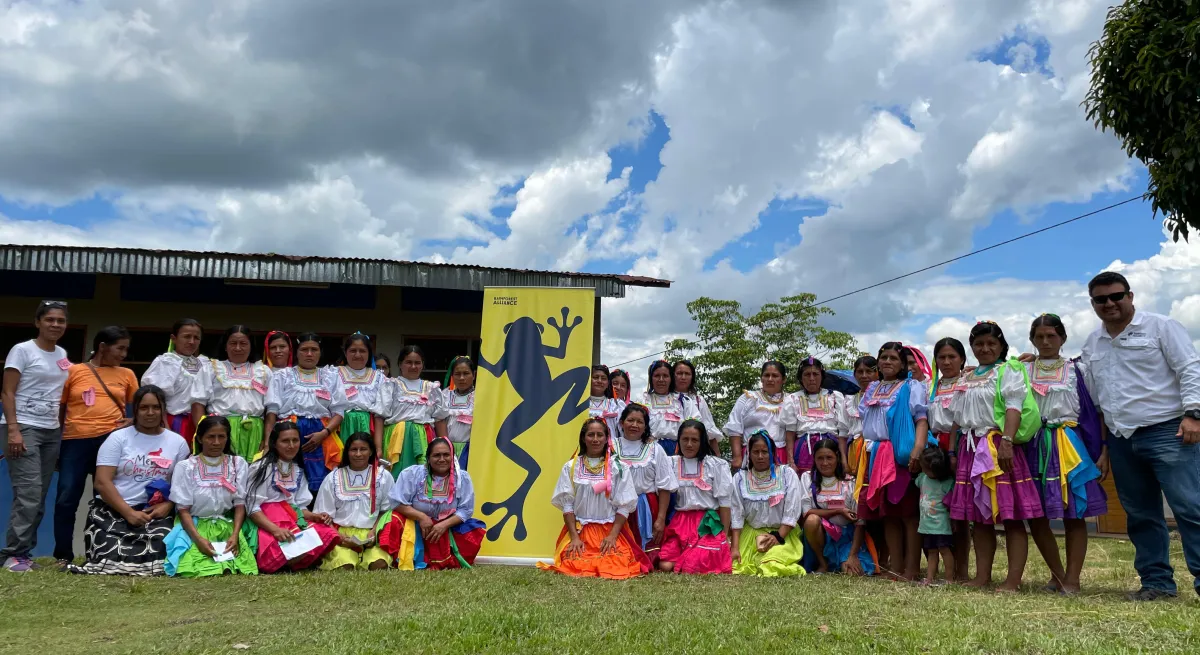
Together with the Julius Baer Foundation, the Rainforest Alliance is working to strengthen the organisational, economic, and productive capacities of small-scale coffee and cacao farmers in the Amazon Basin of Colombia and Peru. With a special emphasis on inclusion of women, youth, and Indigenous people, the initiative fosters adoption of climate-smart regenerative farming practices – while providing credit access and implementing new infrastructure such as cacao drying and fermentation units.
These efforts promise to enable previously underserved groups to improve their crop yields and meet the quality and volume requirements of more profitable international markets. In this way, the project aims to counter wealth inequality, promote equitable economic development, and protect biodiversity in this precious Amazon region.
Quick facts
- Amazon Basin, Colombia and Peru
- Project support: 2025-2028
- Grant amount: CHF 600,000
- Upskilling and funding women and youth farmers from indigenous communities in Peru and producer committees in Colombia and connecting them with responsible coffee and cocoa buyers.
- Goal: Empowering underserved local communities while incentivising implementation of restorative, climate-resilient production practices and enabling access to better markets and robust contracts.

From exclusion and obstacles…
In the Colombian and Peruvian Amazon, rural and native farming communities – especially women – lack technical assistance and access to responsible markets, perpetuating low-incomes and wealth inequality.

…to access and empowerment.
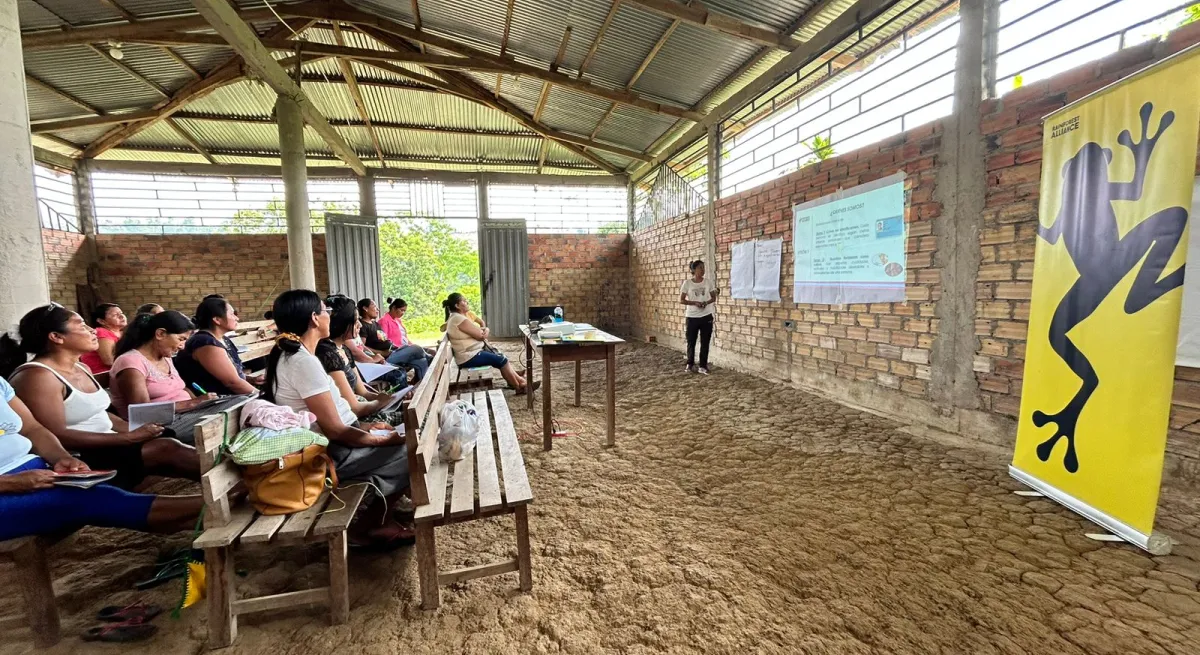
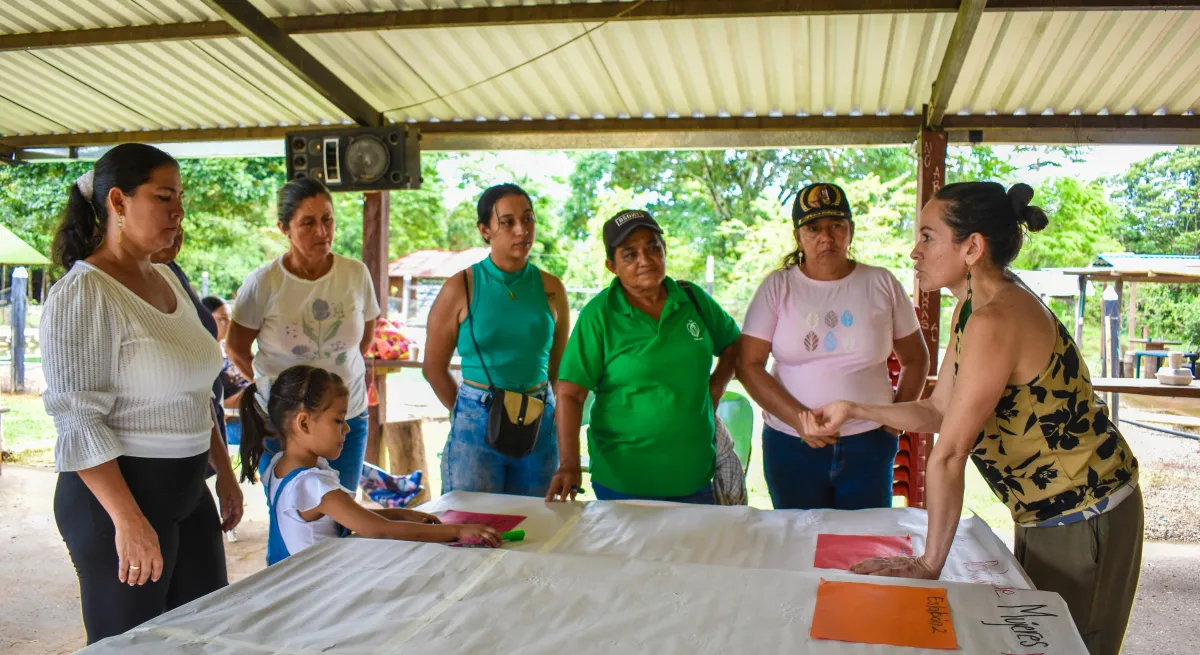
The Rainforest Alliance provides direct management and technical training to help formalise cacao and coffee producer groups, thereby ensuring women’s participation and assumption of key decision-making roles.
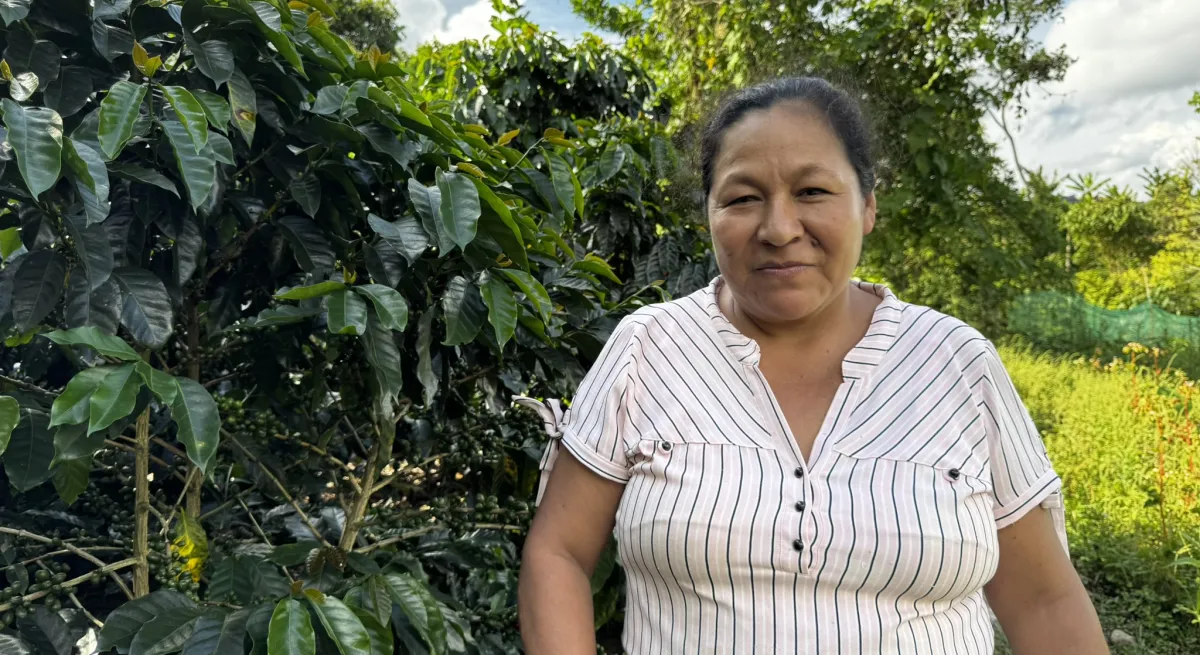
Through this project, we hope to receive valuable training to improve our land, enhance coffee production, and have a better quality of life. As a farmer, I am committed to strengthening my technical skills and would like to learn more about regenerative agricultural practices.

OUTPUT
The Rainforest Alliance project will train at least 330 cocoa and coffee producers in climate-resilient regenerative agriculture and productive restoration practices.

OUTCOME
It aims to raise agricultural productivity by 30%, strengthen climate resilience, and increase incomes for over 300 farmers in Peru and Colombia by at least 15% from coffee or cocoa production.

HIGHLIGHT
In Peru, at least USD 600,000 will be leveraged and specifically tailored to women-led agricultural enterprises thanks to new customised credit products as well as public grant programmes.
Fortifying people and nature
• The biodiversity-rich Amazon basin in Peru and Colombia faces a growing crisis of inequality and ecosystem destruction, fuelled by deforestation for extensive cattle ranching as well as cultivation of illicit crops.
• Rural communities here, especially Indigenous people and women, suffer the worst impacts of climate change and environmental harm, including soil degradation, droughts and extreme rainfall – these decrease their agricultural productivity and contribute to local food insecurity.
• Thanks to the support of the Julius Baer Foundation, the Rainforest Forest Alliance is developing and implementing a comprehensive approach that jointly advances social equity and restoration of nature.
• At its heart is regenerative agriculture, a powerful solution to the environmental and economic pressures faced by small farmers around the world, whether biodiversity loss or market instability.
• Project participants are trained in agroforestry, for example, which integrates maintenance of trees and cultivation of crops side-by-side – here cacao and coffee. This restores soils, promotes biodiversity, sequesters carbon, generates
highly marketable yields, and much more.