I often play with words. Play is an integral part of what makes us human, an expression of our imaginative and creative capacity. It allows us to take (or do) something familiar, turn (or alter) it slightly, and notice what else becomes visible (or possible). When we say wealth inequality, the mind often goes immediately to the problem: the gap, the injustice, the imbalance, the statistics, the accumulation, the absence. It could open up discomfort and feelings like anger and discontentment. It`s important that these are felt, but what then?
I once heard inequalities researcher, Prof. Thomas Piketty remark in an interview, that we need new imaginations when confronting the issue of inequality. This stayed with me. Do we focus only on the problem, or can we also shift focus to the visions of equality, that many potential pathways may lead us toward? What happens when we play, shifting the words slightly, from wealth inequality to wealth in equality?
This shift is both a provocation and an invitation.
It asks: what forms of wealth become possible when equality is the ground from which we begin? What becomes visible when people do not meet each other through status, hierarchy, inheritance, shame or aspiration, but through their shared humanity? What if wealth is not only money, assets or ownership, but also relationship, health, community, creativity, knowledge, memory, clean air, land, care, belonging and connection to the natural world? What does it mean to be rich and abundant? What does it mean to share, from such a place?
Stepping into the role of Head of the Wealth Inequality Initiative, I found myself re-turning to these questions. The Initiative, established by the Julius Baer Foundation, works across the wealth divide to deepen understanding of global wealth disparities, build collaboration across the wealth spectrum, and catalyse meaningful change toward more equitable societies. Its work is grounded in the belief that inequality is not only a technical or economic challenge, but a systemic one that touches opportunity, trust, education, health, social mobility, power and our collective wellbeing.
This summer, we received an opportunity, to play, and to prototype.
Wealth In Equality Session at the Klosters Forum
The Klosters Forum gathered a carefully curated community of global leaders, creatives, environmental practitioners, philanthropists, cultural producers and systems thinkers in the Swiss Alps from 17–19 June 2026. The forum`s theme was The Cultural Turn: How to Centre Creative Power for Ecological Change exploring how creative processes, cultural practices and new collaborations between the environmental and creative sectors can help us navigate current ecological challenges. Within this context, we offered a participatory and exploratory workshop titled Wealth in Equality.
Wealth inequality is not only a social imbalance. It is also a driver of socioecological crisis. Extreme concentrations of wealth shape consumption, power, decision-making and patterns of extraction in ways that deepen environmental degradation and social fragmentation. Addressing wealth inequality requires more than information - facts, figures and datapoints. It requires a shift in perception, meaning, relationship and action.
The workshop design and methodology brought together Donella Meadows’ Leverage Points for Systems Change (Meadows 1998), Jack Mezirow`s Transformative Learning Theory, complex systems awareness, and somatic and socially engaged art practices. Meadows’ systems change work reminds us that the deepest places to intervene in a system are not only parameters, rules or feedback loops, but the goals, mindsets, paradigms and the human and social consciousness from which the system itself arises.
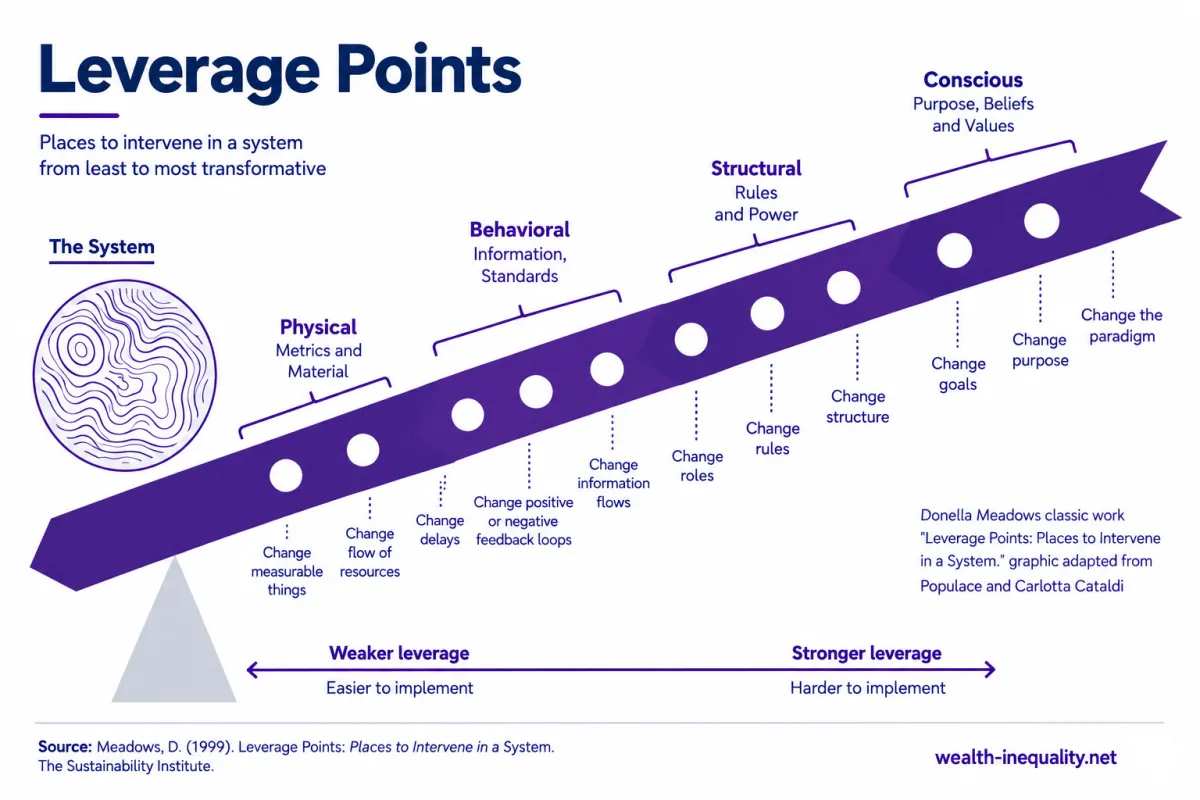
Art and embodiment can touch these deeper layers because they work through metaphor, imagination, memory, sensation and the body, accessing ways of knowing that often sit beneath language and conscious reasoning. They may therefore become pathways to deep leverage, engaging the symbolic, emotional and somatic dimensions through which paradigms are held, reproduced and transformed. For wealth inequality, this matters. Redistribution, policy, taxation, philanthropy and institutional reform are essential, but if the underlying paradigm of wealth remains organised around extraction, scarcity, individual success, separation and status, the system will continue to reproduce inequality in new forms.
This is why the workshop did not begin with data.
It began with the body.
The Session
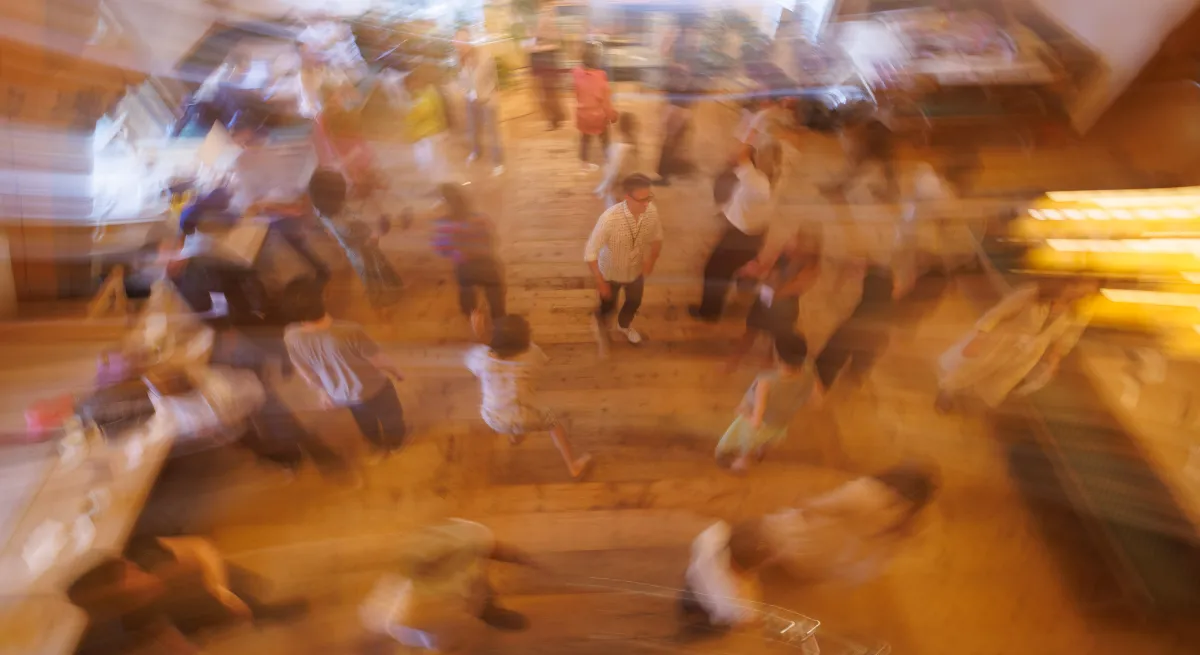
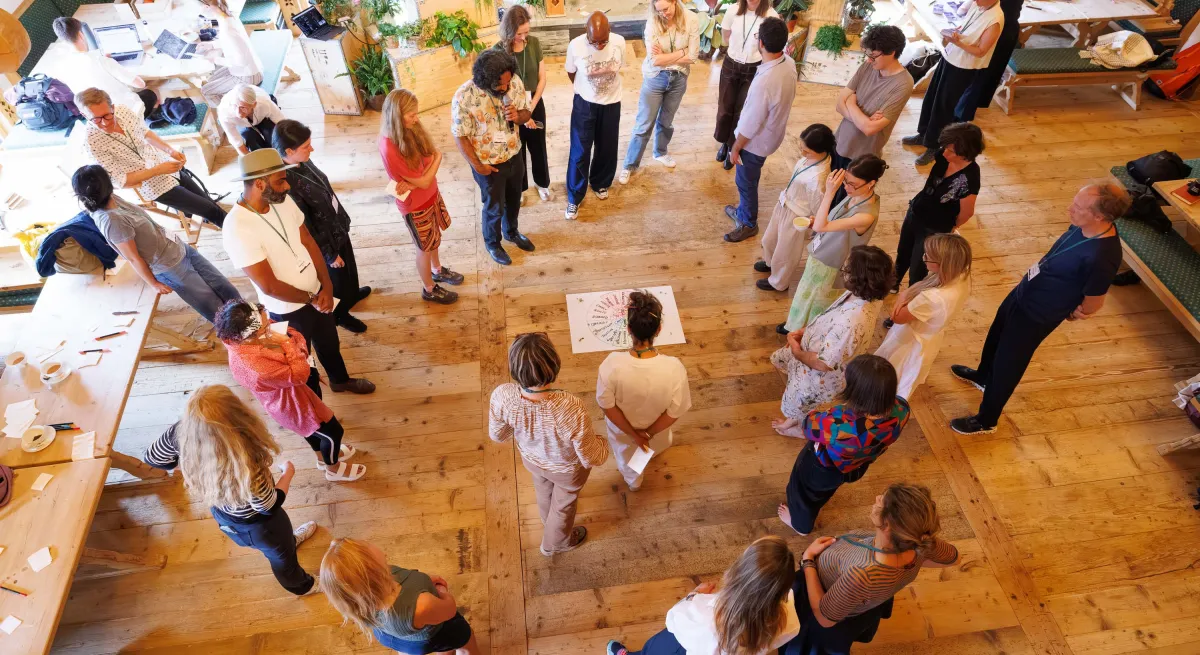
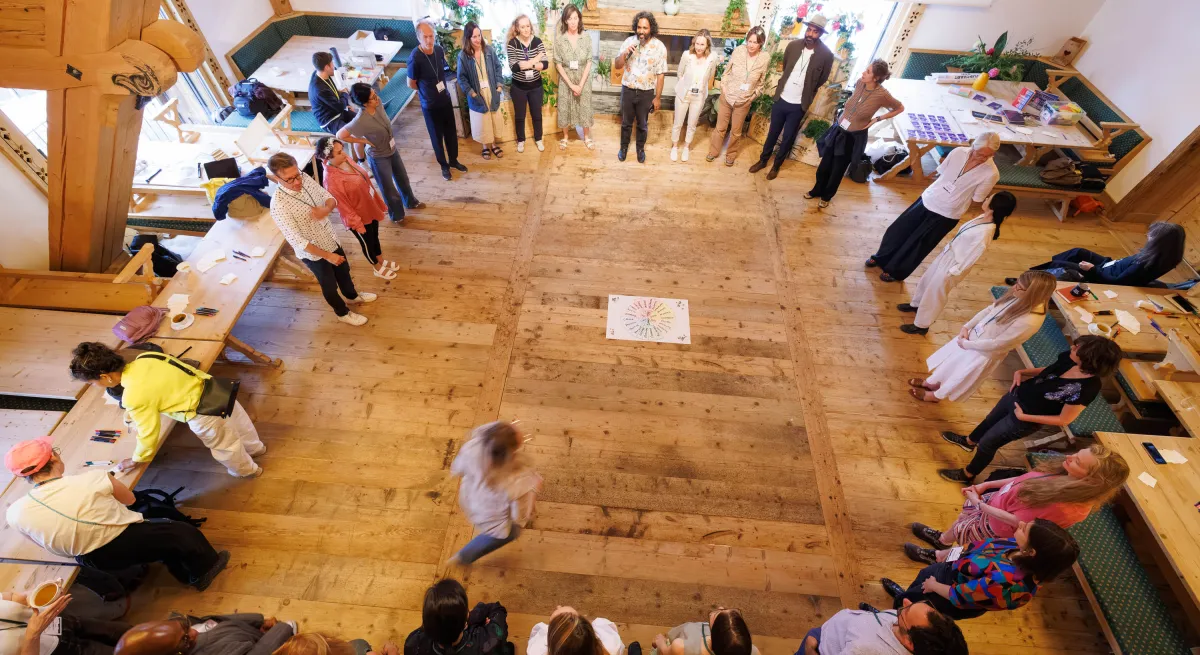
Participants moved through a carefully designed arc of embodied experience, personal reflection, relational encounter and collective sense-making. A starting ritual invited them to notice their emotional state and enter the space with greater presence. Guided movement then shifted attention away from professional identities and intellectual positions towards the body, the senses and the people sharing the room.
This was not an ornamental warm-up. It was methodological. Creative and embodied practices can bring us into contact with forms of knowledge that often sit beneath rational analysis: memory, emotion, intuition, imagination and relational intelligence. Sustainability transformation scholars increasingly argue that deep change requires us to reconnect body and mind, integrate scientific, artistic, embodied and local knowledges, and create spaces for reflection, meaning-making and experimentation (Bentz et al. 2022).
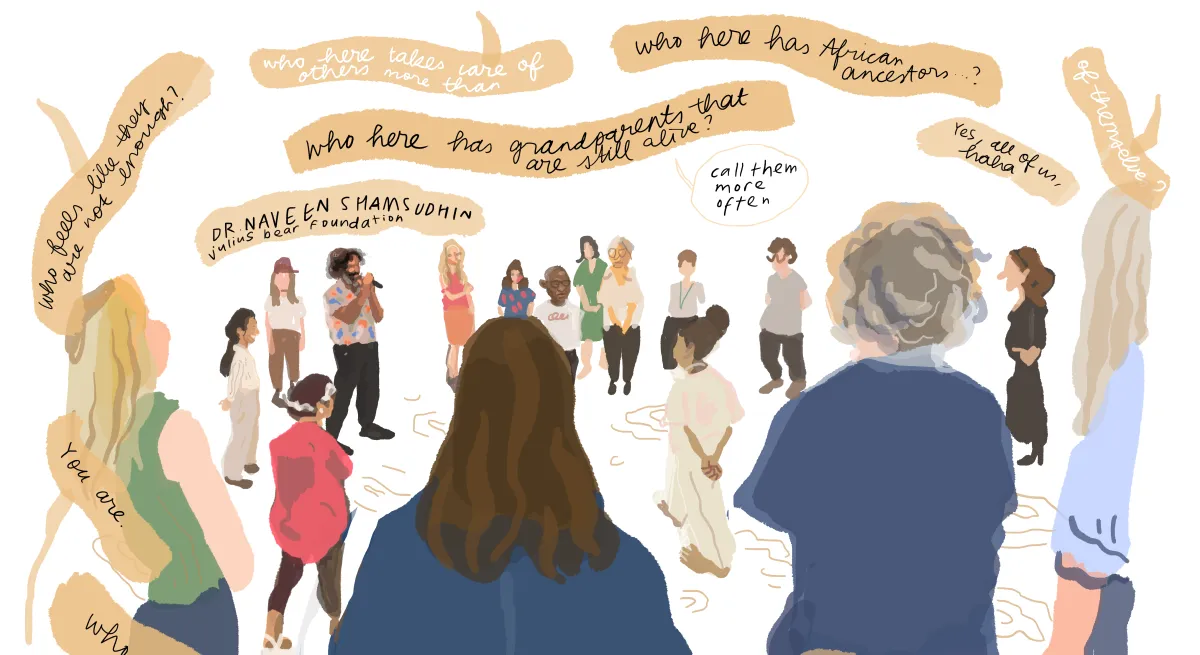
From this embodied ground, participants explored formative memories of money and wealth, communicating with one another through movement, gesture and full-body listening. They then entered a collective practice of Making the Invisible Visible, encountering questions about family history, education, poverty, debt, inheritance, privilege, aspiration and loss. Rather than debating inequality as something external, the group became a living map of the system itself. Differences became visible, but so did unexpected commonalities. Experiences often hidden beneath status and polished public identities could be witnessed without being classified, judged or simplified.
The workshop drew on Transformative Learning Theory, in which unfamiliar or disorienting experiences can open a pathway towards critical reflection, dialogue, new meaning and changed action. Its arc moved deliberately from embodied experience to personal memory, relational exchange, collective awareness and agency. It also reflected principles of decolonial embodied transformative learning, which recognises that transformation involves not only changing what we think, but also how knowledge is felt, held and created between people (Sägesser and Shamsudhin 2025).
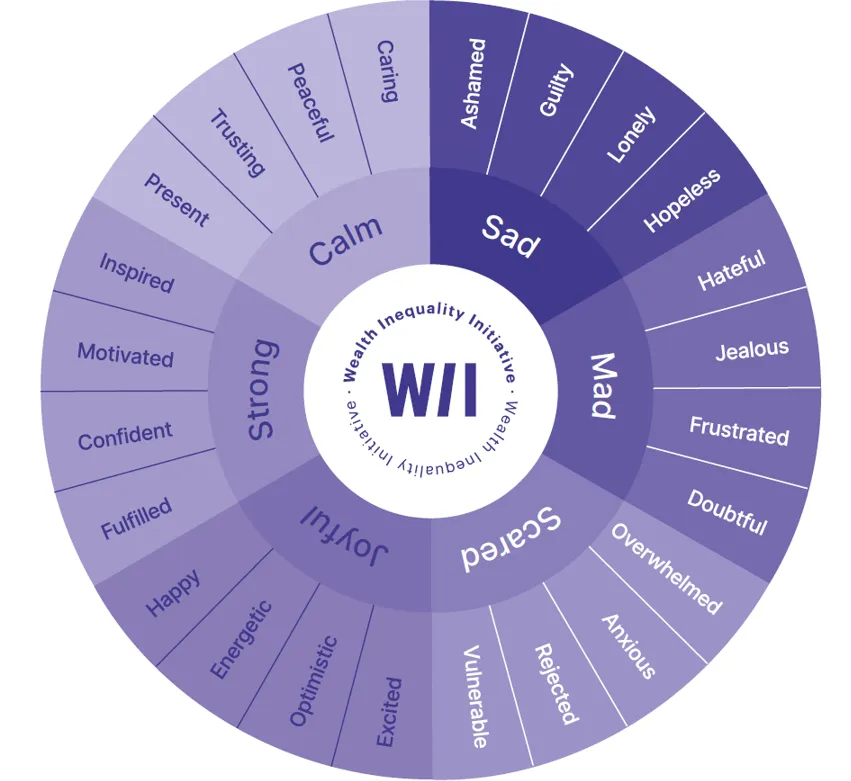
The final movement invited participants to reimagine wealth. What makes us feel genuinely rich or abundant? What do we hold in our relationships, communities, memories, creativity, care and connection with the living world? Participants created their own small archives of wealth beyond financial assets and were invited to carry these into a continuing practice of reflection and gratitude in their daily lives.
The purpose was not to diminish the material realities of inequality, nor to suggest that changes in personal consciousness can substitute for redistribution, policy or institutional reform. It was to cultivate the deeper social awareness from which such change can be understood and acted upon: awareness of how wealth is experienced, inherited, desired, concealed and shared; recognition of one’s own position within systems of inequality; and a stronger sense of relational and individual agency.
The importance of art, embodiment and ritual lies here: they allow us to access what analysis alone often cannot. Facts can inform, but they do not always transform. Art creates metaphor, ambiguity and imagination. Movement and embodiment surface memory, emotion and relational truth. Participatory practice moves people from spectatorship into agency. Arts-based methods for transformative engagement are increasingly used to disrupt habitual ways of thinking, engage emotions, shift narratives and support change from the inside out (Pearson 2018; Lehtimäki, Taylor and Lyra 2024; Singhal 2024). Ritual creates a meaningful container for this passage, marking a threshold between ordinary conversation and deeper attention, and helping new insights move from a momentary experience into memory, meaning and practice.
The outcomes were personal, relational and systemic. Participants expanded their understanding of wealth beyond financial accumulation, encountered inequality through lived experience rather than abstraction, and recognised both difference and common humanity across the wealth spectrum. The workshop made space for vulnerability and trust, while inviting participants to consider how their relationships, resources, networks and decisions might become sites of action. It did not offer a singular solution to wealth inequality, instead, it strengthened the capacities from which multiple pathways towards equality may emerge: imagination, connection, reflexivity, empathy and agency.
The Wealth in Equality session was therefore not a workshop about wealth alone. It was an experiment in embodied social systems awareness. It invited participants to experience wealth inequality not as a distant problem outside themselves, but as a living field of histories, relationships, privileges, vulnerabilities, choices and possibilities in which each of us participates.
In the end, the deepest question in our session was not only: How unequal are we?
It was: What kinds of wealth and embodied action become possible when equality and abundance are where we begin?
References:
Meadows D. Leverage Points – Places to Intervene in a System, Sustainability Institute (1998) link
Bentz, J., do Carmo, L., Schafenacker, N. et al. Creative, embodied practices, and the potentialities for sustainability transformations. Sustain Sci 17, 687–699 (2022). https://doi.org/10.1007/s11625-021-01000-2
Pearson, K.R., Backman, M., Grenni, S., Moriggi, A., Pisters, S., Vrieze de, A. Arts-Based Methods for Transformative Engagement: A Toolkit. Wageningen: SUSPLACE (2018). https://doi.org/10.18174/441523
Lehtimäki H., Taylor, S.S. and Lyra, M.G. Art and Sustainability Transitions in Business and Society - Theoretical Insights and Engagement, Palgrave Macmillan Cham (2024). https://doi.org/10.1007/978-3-031-44219-3
Sägesser, A., & Shamsudhin, N. (2025). Decolonial embodied transformative learning. Proceedings of Relating Systems Thinking and Design, RSD13. Article 61. https://rsdsymposium.org/decolonial-embodied-transformative-learning/
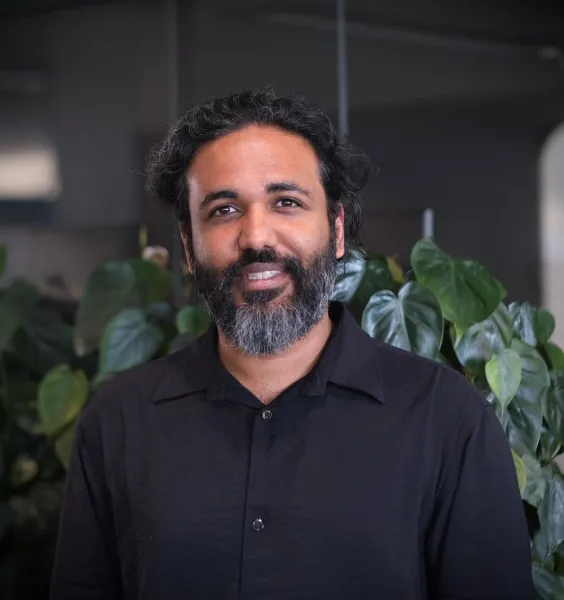
Naveen Shamsudhin, PhD is Head of the Wealth Inequality Initiative.
He is a community weaver, poet, and former researcher and lecturer for robotics at ETH Zurich.
He has co-founded several social impact organizations including Kaleido Retreat and Humane Warriors and is a steward and firekeeper at Collaboratio Helvetica and the World Ethic Forum
He is passionate about catalyzing regenerative change in people, communities, and systems at large.